There’s no way to sugarcoat it; being in debt is no fun. If you’re reading this article, you probably already know that. So, let’s not waste time talking about why debt is the worst and jump right into how to get out of debt.
We’ve broken this detailed guide into a simple 3-step formula:
- Get organized with your debt: Learn the best ways to organize and track your existing debt. This is a crucial step, as it helps you decide the debt repayment strategies that might work best for you.
- Choose your strategy to get out of debt: Learn our top strategies for paying off debt.
- Strengthen your financial foundation: Learn tactics to make sure that, once you’re out of debt, you stay out of debt.
One debt payoff strategy is to pay down high-interest debt with a low-interest loan. This strategy, called consolidation, can help you save money on interest and pay down debt more quickly. Explore loan offers from MoneyLion’s partners.
Table of contents
3 Steps for paying off debt once and for all
When you get in the car, what’s the first thing you normally do?
Usually, the first thing you do is fire up the GPS so you know which direction to go. Sure, you could just start driving in any given direction and hope for the best. But you’d probably end up taking a few wrong turns. Taking a few minutes to load your GPS ensures you’ll get to your destination faster. Paying down debt works the same way.
Your destination is to become debt-free.
On one hand, you could just start making random payments to your debts. But that’s a bit like driving without your GPS: you probably won’t be taking the fastest route.
When it comes to paying off debt, a crucial first step is to get organized and create a plan. This usually saves time, money, and stress over the long run.
Step 1: Get your debt organized 📓
Getting your debt organized requires you to check and jot down your outstanding balances (yep, even the ones that you like to pretend don’t exist). The goal is to learn two things:
- How much you owe
- What interest rates you’re paying
This information is critical for helping you learn the best way to get out of debt. Consider jotting down your info in a chart that looks something like this:
| Name of account | Total amount owed | Interest rate |
| Student loan | $15,235 | 6.5% |
| Credit card #1 | $3,734 | 23% |
| Credit card #2 | $1,850 | 23% |
| Car loan | $8,242 | 12% |
This way, you can compare your balance sizes, interest rates, and good debt compared to bad debt.
Good debt vs bad debt
In the finance world, there are 2 types of debt: Good debt and bad debt.
- Good debt = Money you borrow that can improve your net worth or earning potential. For example, a mortgage is usually considered good debt because the home will likely increase in value over time. Similarly, a student loan can help you secure a higher-paying job down the road.
- Bad debt = Money you borrow that likely won’t improve your net worth or earning potential. For example, credit cards or payday loans are typically considered bad debt because they have high interest rates that make it harder to save and invest money.
When it comes to getting out of debt, you’ll usually want to prioritize paying down your bad debt. first. Bad debt typically carries a much higher interest rate.
Speaking of which…
How does interest work again?
Interest is the fee you pay to borrow money. If you’ve got outstanding balances, they’re likely growing bigger each month because of interest.
Understanding this topic is critical when it comes to paying off debt, so we recommend doing a bit more reading if you’re unfamiliar with interest before continuing to our favorite debt repayment strategies.
👉 How Does Credit Card Interest Work?
👉 What is APR and How Does it Work?
Step 2: Choose your preferred debt repayment plan💲
1. Debt snowball: Pay down your smallest debt first
The debt snowball strategy is when you pay down your smallest debt first and work up to your largest balances. This strategy has 4 steps:
- List your debts: Organize your debt from smallest to largest.
- Set up payments: Make the minimum payments on all debts except your smallest debt.
- Attack your smallest debt: Toss as much money as you can at your smallest debt until it’s gone.
- Repeat until you’re debt-free: Once your smallest debt is paid off, move on to your next-smallest until it’s gone too.
Why this strategy is effective: It simplifies the debt-repayment process and helps you build momentum by creating small wins while you work up to larger wins.
It’s a great option when: You have a lot of different debts that are hard to keep track of. Or, you want to stack some small wins quickly.
2. Debt avalanche: Pay down your highest interest rate first
The debt avalanche method is when you pay down your debt with the highest interest rate first. It’s very similar to the snowball strategy, and follows these 4 steps:
- List your debts: Organize your debt from the smallest interest rate to the highest.
- Set up payments: Make the minimum payments on all debts except the one with the highest interest rate.
- Attack the debt with the highest interest rate: Toss as much money as you can at your debt with the highest rate.
- Repeat until you’re debt-free: Once your highest-interest debt is paid off, move on to the next-highest until it’s paid off too.
Why this strategy is effective: It pays down your debt that is likely growing the fastest (AKA the one with the highest interest rate). Prioritizing high-interest debt can help you pay down debt more quickly and save money on interest.
It’s a great option when: Some of your debts have much higher interest rates than others (like credit card interest vs. student loans).
3. Hybrid approach: Combine the snowball and avalanche strategies
It’s important to remember that you can always blend strategies.
For example, you can start with a snowball method to pay off 1 or 2 small debts and start building momentum. Then, maybe move on to your largest remaining debt that has the highest interest rate.
Why this strategy is effective: It helps you enjoy the benefits of both strategies.
It’s a great option when: You have many different balances carrying different interest rates.
👉 How to Pay Off a Personal Loan Faster
4. Consider debt consolidation or refinancing your debt
Strategies like consolidation or refinancing are smart ways to save money on interest and simplify your repayment plan.
- Debt consolidation: When you take out one big loan to pay off multiple smaller debts. This usually helps you secure a lower interest rate, while also simplifying your finances.
- Debt refinancing: When you replace an existing loan with a new one that offers better terms
The main difference is that refinancing replaces just one loan with a new one, while consolidation replaces many loans with a new one.
Why this strategy is effective: It helps you simplify your finances, potentially lower your interest rate(s), and set yourself on a clearer path to becoming debt-free.
It’s a great option when: You have high-interest debt and are eligible for loans that offer better terms.
👉 How to Consolidate Credit Card Debt
5. Look into a balance transfer credit card
A balance transfer credit card is a specialized credit card that lets you transfer existing debt from one or more cards to a new one that typically has a 0% interest rate for a set period.
While this doesn’t eliminate your debt, it essentially lets you press pause on your credit card interest for a little bit. Here’s how it works:
- Apply for a balance transfer card: The application works similarly to any other credit card, where your approval and limit vary based on your creditworthiness.
- Initiate your transfer: If approved, you’ll be able to transfer an existing balance to your new card up to your approved limit.
- Pay a fee: You usually have to pay anywhere from 1% to 5% of the balance when making a transfer. For this strategy to make sense, this fee should be smaller than the amount you’d otherwise pay in interest.
- Enjoy several months of no interest: With 0% interest, your balance will stop growing for several months, giving you much-needed breathing room to pay it down.
Why this strategy is effective: The 0% interest period means that your balance won’t grow for months, if not years. Balance transfer cards offer 0% intro rates that last anywhere from 6 months to 21 months.
It’s a great option when: You have credit card debt that’s growing faster than you can pay it down.
👉 What Is the Best Strategy to Avoid Paying Interest on Your Credit Card
👉 How to Pay Off Credit Card Debt Fast
6. Work with a nonprofit: Call a credit counseling organization to create a debt management plan
When you’re on a road trip, it’s helpful to have a co-pilot who can give you directions. The same applies to your “get out of debt” journey; it can be helpful to have a co-pilot offering strategic advice.
There are plenty of cheap certified professionals who understand how to pay off debt and offer guidance on how to pay off debt fast.
For example, the National Foundation for Credit Counseling offers low-cost debt counseling. If you want to get started, just schedule a 30-minute call, explain your situation, and one of their professionals will advise you on a course of action.
7. Explore online communities: Get real-world advice from people who have gotten out of debt
If you want to learn how to pay down debt fast, consider crowdsourcing advice from real people who have actually dug themselves out of a financial hole. There are a few great options to explore:
- Reddit: One of the internet’s best destinations for learning specific information from real people.
- Facebook Groups: Another great place to speak with real people to share ideas and success stories.
- MoneyLion’s Community: Our customersmembers frequently document money strategies that have worked for them.
8. How to get out of debt fast: Tap into immediate help resources
Sometimes, getting out of debt requires a bit of extra assistance. Here are some strategies you can explore if you feel like you could use outside help:
- Get in touch with local emergency assistance: Most communities have programs in place to help those in need, whether it’s financial assistance, food banks, or utility help. You can usually learn more by dialing 2-1-1 (although results vary depending on your location).
- Reach out to local charitable organizations: Many local churches, community centers, and nonprofits may offer food runs or other types of assistance to help people in need. Leaning on these free resources can help give you a helping hand when you need it most.
- Research local rental assistance programs: Some communities may offer help with your rent or utility bills. Again, this varies depending on your location.
- Apply for government assistance: Consider exploring programs like SNAP (food stamps), Medicaid, and TANF to see if you’re eligible.
9. Negotiate with your lenders to create breathing room
Lenders often feel like nameless, faceless entities who are just out to get you. But in reality, they’re just people who are doing their job. Calling your lenders directly and asking for help is actually one of the easiest ways to pay off debt because it requires minimal extra work, just a phone call.
Remember, your lenders want you to repay them (or else they’re losing money), so it’s in their best interests to help you out.
Here are a few things to ask about when contacting your lender:
- Hardship programs: Many lenders have built-in plans for people who are struggling with repayment.
- Improved terms: Lenders may offer reduced payments to help you get your feet underneath you.
- Temporary Forbearance: Lenders may approve you for a temporary break from making payments.
If you choose to pursue this strategy, be sure to prioritize your most essential debts first. Usually, this means calling your mortgage or car lender first, before moving on to your credit card or payday lenders.
10. Consider debt settlement or bankruptcy (as a last resort)
If you’ve run out of ideas on how to pay off your debt, then it might be time to consider settling your debt or even declaring bankruptcy.
Bankruptcy is a legal process that can help you eliminate your debts under the protection of a federal court. It’s a bit like a last resort “get out of debt free” card that you can play if you really need a financial reset.
However, while bankruptcy can help wipe your financial slate clean, it will negatively impact your credit score and may result in the loss of assets.
👉 Bankruptcy Vs Debt Consolidation: Which Is Better For You
Step 3: Strengthen your financial foundation to stay debt-free once and for all
Perhaps the best way to get out of debt is by strengthening your financial foundation so that you can build healthy habits that keep you out of debt for the long term.
Create a budget (and stick to it)
Being on top of your budget is a cornerstone of financial health. Essentially, it comes down to spending less than you earn. If you can do this consistently, you’ll avoid getting into debt and can work on building your savings or investments.
However, if you consistently spend more than you earn, then you might find yourself in debt again before you know it.
👉 7 Best Budgeting Apps for 2025
👉 How to Create a Monthly Budget in 8 Steps
Find ways to bring in extra money
We all know that making more money is easier said than done. If there were a magic “Hire Me!” button that instantly gave you a $500k salary, we’d all be doing just fine.
That said, while landing a new high-paying career may be a major hurdle, making a few extra bucks is usually much easier. You can learn some of our favorite side hustle ideas by checking out our complete guides:
👉 Explore Side Hustles to Make Money
👉 Top 19 Side Hustles for Women in 2025
👉 How to Make Quick Money: 21 Quick Money Jobs
Redirect your debt payments to your savings
Once you’ve paid off your debt, consider redirecting your debt payments to your savings or investment account.
If you normally pay $200 a month to your debt, just start paying $200 to your savings once you pay off your debt. This will help ensure you keep making progress toward your financial goals and don’t slip back into old habits.
4 Practical tips for staying motivated while paying off debt
A major part of paying off debt is simply staying motivated with your plan. Let’s explore 4 ways that you can do that:
1. Track and celebrate small wins
Set up mini-milestones (like paying off $1,000, $500, or even $100 in debt) and acknowledge each achievement. Even something as simple as enjoying a small treat can help you recognize your own progress and keep the momentum going when the finish line feels far away.
2. Calculate your “freedom date”
Figure out exactly when you’ll be debt-free based on your current payment plan, then put it on your calendar. Having a concrete end date makes the sacrifice feel temporary rather than endless.
Another option: calculate how much interest you’ll save by making extra payments each month. Assigning a dollar amount to your daily sacrifices is another great way to stay motivated.
3. Automate to remove daily temptation
Set up automatic payments so you don’t have to physically press “transfer” on your debt payments each month. When the money moves automatically to debt payments, you’re less likely to talk yourself out of the plan during tougher months.
4. Find your “why” and keep it visible
What’s motivating you the most to get out of debt? This could be just about anything:
- Wanting to start (or take care of) your family
- Wanting to buy a home one day
- Wanting to have more choices in life
- Wanting to be less stressed or anxious
- Wanting to be prepared for emergencies
Whatever your why is, write it down and put it somewhere you’ll see daily.
When motivation dips, reconnecting with your deeper reason can help push through the temporary discomfort.
How to Get Out of Debt: Take It One Step at a Time
Getting out of debt can feel incredibly daunting, and it’s often best to simplify the process by creating a plan and just taking things one step at a time.
First, try organizing your balances so you know exactly what you’re up against. Then, pick a debt repayment strategy that you think will work best for you, whether that’s snowballing the small stuff, avalanching high-interest debt, or consolidating for simplicity.
Finally, work on strengthening your financial foundation with a budget, side hustles, and smart habits so debt doesn’t sneak back in. Remember: every payment gets you closer to freedom, and even small wins add up.
Stay consistent, keep your eyes on your “why,” and you’ll be debt-free sooner than you think.
Your Top Insights
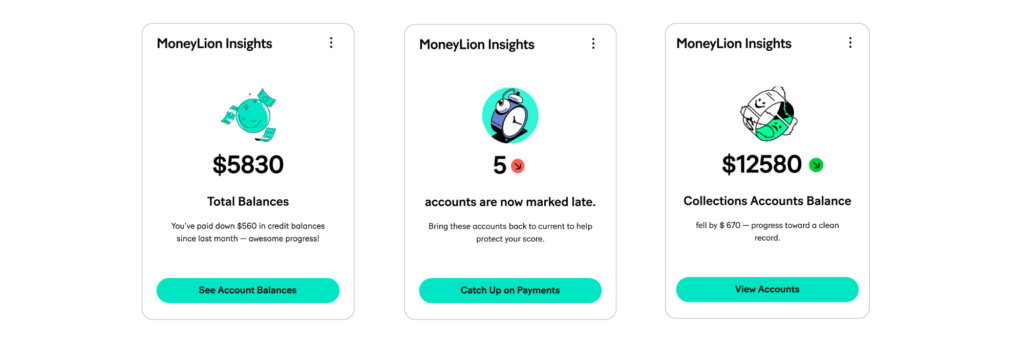
Interest adds up daily—the longer you wait, the more you pay.
FAQs
What is a fast way to get out of debt?
MoneyLion’s 3 tips for getting out of debt are: Organizing your debt, choosing a debt repayment strategy from our list above, and strengthening your financial foundation.
What is the best way to pay off debt?
Pick a strategy from our list above that works best for your debt, income, and lifestyle. The most popular debt repayment strategies include the debt avalanche method (paying down high-interest debt first) and the snowball method (knocking out your small balances for quick wins).
What are some of the best debt repayment strategies?
There are several effective debt repayment strategies, including debt snowball, debt avalanche, debt consolidation, and using a balance transfer card. To learn even more strategies, read the full article above.